
Dog and cat festival guide
Manja injuries to animals: what the kite season does, what the ban really covers, and the first five minutes
The national ban covers nylon manja and not glass-coated cotton thread, and a Bengaluru survey found only a third of people knew any ban existed. The string also outlives the festival by months.
Quick answer
Manja injuries to animals peak around Makar Sankranti and Independence Day, and they are documented, seasonal and largely preventable. Gujarat treated 16,380 birds cut by kite string between 10 and 20 January 2026. Nylon and synthetic manja is banned across India by the National Green Tribunal, but glass-coated cotton thread is not, although Delhi and Karnataka ban that too. Keep dogs leashed and off terraces, check the animal after every outing, never pull embedded string, and call a vet or a rescue helpline the same day.
This guide is general information for Indian pet owners and is not a diagnosis. Always consult a registered veterinarian near you before acting on anything you read here, and treat any sudden change in your pet's condition as urgent.
What manja actually is, and why there are two kinds
Manja is kite-flying thread made deliberately sharp, and India has two distinct versions of it. The older one is cotton thread coated with powdered glass and glue. The newer one is nylon or another synthetic fibre, sold as Chinese manja. The law treats them differently, which decides what you can report and what you cannot.
The forensic paper that first described these injuries in detail defines manja as kite-line made of cotton or nylon string coated with fine glass powder using glue and other chemicals as adhesives, used to cut down an opponent's kite string in a kite fighting game. The glass is not industrial. Glass from bottles, bulbs or tube lights is ground and passed through a sieve, the thread is coated with the powder and adhesive, and it is dried in the open at room temperature.
Why the two kinds are not the same legal problem
The National Green Tribunal traced the change itself. Manja began as plain cotton, was strengthened with gum and boiled rice once kite fighting turned competitive, moved to glass powder and iron powder, and finally to synthetic yarn with a synthetic coating that is also a good conductor of electricity, which is how high-tension line accidents began. The Tribunal then concluded that it is only the manjha made of synthetic yarn and coated with synthetic material, being non-degradable, that creates a menace for all, and that traditional cotton manjha, if coated, is coated with degradable materials and does not cause environmental damage.
Read that twice, because it is the hinge of the entire law. The Tribunal's reasoning turns on biodegradability, not on sharpness. A glass-coated cotton thread cuts a dog's leg exactly as a nylon one does. It simply rots away faster afterwards.
The synthetic kind also lasts. The Wildlife Trust of India records that Chinese manjha, unlike cotton manja, does not lose its strength even after getting wet, and so stays in the environment for a long time. That single property is why the injuries do not stop when the festival does.
Telling them apart on your own terrace is a practical skill worth ten minutes. The three things you will find are described below.
- Plain cotton thread, often sold as saddi, looks dull and fibrous and breaks under steady pressure between gloved fingers.
- Glass-coated cotton manja feels stiff and faintly gritty through a glove, is usually dyed a bright colour, and leaves a dusty residue on cloth.
- Nylon or synthetic manja looks smooth, shiny and extremely thin, and does not snap under hand pressure at all. This is the one that is banned everywhere in India.
- No packet tells you which you have bought. A Bengaluru wildlife rehabilitator describes manja reaching shops in unlabelled packets, with the shopkeeper fitting it to the hoop in front of the buyer.
How many animals manja injures in one season
Gujarat publishes the only large official count in India, and it treated 16,380 birds injured by kite strings between 10 and 20 January 2026. That is one state, one eleven-day campaign window, and birds only.
The Gujarat Forest and Environment Department ran its Karuna Abhiyan across all 33 districts and treated those 16,380 birds, of which 14,690 survived, a recovery rate of 90 percent. Ahmedabad alone accounted for 7,040 treated and 6,532 rescued, Surat for 4,194 saved out of 4,800 treated, Vadodara 649 of 722, Rajkot 553 of 676 and Gandhinagar 313 of 329.
Pigeons took the bulk of it, at 13,636 of the 16,380. Black kites followed at 905, then crows at 281, sparrow hawks at 180, black ibises at 137, owls at 134, egrets at 121 and parrots at 110, across 41 species in all.
| Who published it | Where | Period | Count |
|---|---|---|---|
| Gujarat Forest and Environment Department | Whole state, 33 districts | 10 to 20 January 2026 | 16,380 birds treated, 14,690 survived |
| Chief Conservator of Wildlife, Gujarat, as reported by PETA India | Whole state | Previous Uttarayan season | 17,065 birds injured, 1,493 died |
| Jivdaya Charitable Trust | Ahmedabad | 1 to 9 January 2026 | 736 birds, 72 chicks, 15 animals, 823 cases |
| Jivdaya Charitable Trust | Ahmedabad | Same nine days, previous year | 582 injured birds |
| People for Animals | Bengaluru | Full year 2025 | 790 birds, against 469 in 2024 |
| Avian and Reptile Rehabilitation Centre | Bengaluru | Full year 2025 | 3,614 rescues, 1,560 of them in the last quarter |
| Bruhat Bengaluru Mahanagara Palike rescue database | Bangalore | November 2010 to June 2014 | 250 instances, 268 birds |
Ahmedabad shows how fast the season loads. The Jivdaya Charitable Trust recorded 736 injured birds between 1 and 9 January 2026, plus 72 chicks and 15 animals, 823 cases in nine days, against 582 injured birds in the same nine days a year earlier. Pigeons alone accounted for 178 of them, black kites 39, and rose-ringed parakeets and crows 10 each.
Bengaluru is a smaller kite city and still produces numbers. People for Animals rescued 790 birds injured by manja in 2025, against 469 in 2024. The Avian and Reptile Rehabilitation Centre recorded 3,614 manjha-related rescues in 2025, of which 1,560 fell in the last quarter alone. Over the years the PfA wildlife hospital has handled more than 14,800 manjha cases.
Where the official Gujarat figures disagree with each other
Two government accounts of the same campaign do not match, and we are publishing both rather than choosing one. DD News, reporting Forest and Environment Department data, says Karuna Abhiyan launched in 2017, has rescued more than 1.18 lakh birds over ten years and treated more than 1.29 lakh. The Times of India, quoting the state forest and environment minister on 13 January 2026, says the campaign has run since 2015 and enabled the rescue of over 1.12 lakh animals and birds.
The deployment figures differ too. One account gives more than 60 control rooms, more than 650 veterinary doctors and about 8,000 staff and volunteers. The other gives 85 control rooms, 740 vets and 8,500 staff and volunteers Niyati Parikh and Himanshu Kaushik. Both agree on 450 collection centres and 480 treatment centres. Treat the multi-year campaign totals as approximate and the single-season count as the firm number.
A third figure sits beside them and is the clearest published death toll available. PETA India, citing data released by the Chief Conservator of Wildlife, reports 17,065 birds injured by kite strings and manja in Gujarat during the previous season, of which 1,493 died despite sustained rescue and veterinary effort.
The Wildlife Trust of India states plainly that there has been no systematic study to quantify bird deaths from kite flying, and offers only a rough estimate of over 10,000 avian emergencies attended during the month of January every year. Anyone quoting a precise all-India figure is guessing. Gujarat's count is large because Gujarat counts, not because Gujarat is uniquely affected.
Dogs, cats and cattle are in this too
Dogs, cats and cattle are cut by manja as well as birds, and the records that capture it are thin only because nobody runs a count for them.
The clearest evidence sits in rescue registers rather than in research. The Jivdaya Charitable Trust's nine-day January 2026 tally runs 736 injured birds, 72 chicks and 15 animals, and the trust describes those 15 as squirrels, bats and other small wildlife entangled in loose kite strings hanging from trees, balconies and electric lines.
Government documents name the animals the rules were written for. Delhi's Department of Environment states that the Lieutenant Governor's notification was issued to prevent adverse effects on human beings, cattle population, birds, soil and ecology. The National Green Tribunal's own finding is that sharp manjha cuts the skin of birds, animals and human beings. The Animal Welfare Board of India frames the whole problem as criminal cruelty to animals and people. The Wildlife Trust of India lists the species it treats as birds, fruit bats, monkeys and humans.
Why dogs and cats are caught at all comes down to where the string ends up. Once a kite is severed it drifts and settles on tall trees, electricity poles and buildings, and the breeze twists the thread firmly onto whatever it lands on. What does not lodge overhead falls into the street, onto terraces and into parks, at exactly the height a dog's legs, neck and muzzle move through.
Four situations account for almost every pet case rescuers describe.
- Walking through a tangle on a pavement, in a park or across a construction plot, where the string wraps a leg and tightens every time the animal pulls.
- Mouthing a dropped spool, which cuts the tongue, gums and lips and is the usual route to a swallowed length.
- Reaching a terrace, balcony or open stairwell where cut string has collected overnight. This is where cats are caught.
- Standing under a tree or a wire while a loose length is still hanging, which is how a dog ends up with a cut across the back or the ear.
Community animals carry the heaviest share of this, because nobody checks their routes and nobody sees the wound for two or three days. Our guide to free-ranging dogs in India sets out the civic and legal position, and feeding community dogs in India covers the daily routine around them, which is the practical place to add a kite-season check.
No Indian study has counted manja wounds in dogs or cats, and this page is not going to invent one. What can be said honestly is that every organisation holding real records reports non-bird animals among its cases, and that nobody is tracking them.
Why a manja cut is worse than it looks
A manja cut is worse than it looks because the thread is fine, the surface wound is narrow, and the damage runs underneath it. Surgeons who repair these wounds describe the deceptive appearance of manja giving a false impression of a simple lacerated wound which could be just the tip of the iceberg.
That phrase comes from a prospective series of ten manja cut injuries at a tertiary centre in Nagpur, Maharashtra. Across those ten patients there were 8 injured digits and 14 severed tendons, and five patients had a digital neurovascular pedicle cut. Three of the ten delayed coming in because the wound looked trivial, and two of those three turned out to have tendon injuries.
Those are human cases. No equivalent series exists for dogs or cats anywhere in India, and we are not going to pretend otherwise. The mechanism, though, does not change with the patient. The same thread, drawn under tension across skin, cuts the same way through a paw as through a finger.
What a wound that looks minor can hide
Forensic medicine lists seven recognisable features of a manja injury, set out in the table below.
| Feature | What it means at the clinic door |
|---|---|
| Always transverse or oblique, encircling the contour of the body | The cut follows the curve of a limb or a neck rather than sitting flat |
| Usually single | One wound, not a cluster, which is why it is mistaken for a scratch |
| Unidirectional | The thread was travelling one way, which tells you where to look for glass |
| Edges of the incised wound are abraded | Not the clean line a blade makes |
| Margins of the incised wound are ragged | Harder to close well and slower to heal |
| Deepest at the centre of the injury | The middle of a shallow-looking cut is where tendon damage hides |
| Glass particles at the angle of the injury | They sit opposite the direction the manja was moving, and they stay there |
Two of those decide how the wound is treated. Because the edges are abraded and the margins ragged, the cut is not the clean line a scalpel makes, and because fine glass sits at the angle of the injury, something abrasive remains inside it. The published management advice is that careful examination may reveal that tissue damage is deeper than expected, and that all fine glass particles should be removed from the wound.
Entanglement does damage of a second kind. A constricting loop tightens every time the animal struggles, and in birds the documented result runs from fractures and ligament and muscle separation to complete amputation of the wing. A Bengaluru chief veterinarian puts it at nearly one in ten injured birds not surviving despite timely rescue, with more left permanently disabled when the sharp nylon thread partially amputates a wing.
The human data on neck wounds explains why speed matters. In a 26-case forensic series from Amritsar covering January 2022 to January 2024, both fatal cases were young men who died within a few minutes, of haemorrhagic shock and of a cut throat, in each case from extensive blood vessel damage in the neck. The same series found the neck the one region where damage routinely extended into muscles and vessels while head and face wounds stayed superficial.
A manja cut that has stopped bleeding and looks like a scratch can still have taken a tendon, and glass left inside keeps cutting. Assume deep tissue damage until a veterinarian has ruled it out. Have every manja wound examined, even a small one, and say the word manja when you arrive. This page is general information and does not replace an examination by a veterinarian.
Left alone in Indian conditions, an open wound on an outdoor animal attracts flies within a day or two, and the humid weeks on either side of the monsoon are the worst of it. Our page on maggot wounds in dogs in India covers what follows and how short the window is.
What the ban actually prohibits
The ban prohibits manja made of nylon or any synthetic material, or coated with a synthetic substance, and non-biodegradable. At national level it does not prohibit cotton thread coated with powdered glass.
The National Green Tribunal issued six directions on 11 July 2017 in O.A. Nos. 384/2016 and 442/2016, Khalid Ashraf and another against Union of India and others. Direction one imposes a total ban on manjha or thread for kite flying which is made of nylon or any synthetic material and/or is coated with synthetic substance and is non-biodegradable. Direction two tells state governments to prohibit its manufacture, sale, storage, purchase and use. Direction four bans import anywhere in the country. Direction six tells states to act against defaulters under the Environment (Protection) Act 1986, the Prevention of Cruelty to Animals Act 1960, the Wildlife (Protection) Act 1972 or the Indian Penal Code.
The environment ministry confirmed the same scope in Parliament. Answering Lok Sabha Unstarred Question No. 1863 on 13 March 2023, it stated that the 11 July 2017 order banned manjha made of nylon or any synthetic material and coated with synthetic substance and non-biodegradable, and that all Chief Secretaries were directed to enforce the prohibition throughout their territories.
What the order leaves out, and who closed the gap
Glass-coated cotton thread sits outside the national ban, and the Animal Welfare Board of India has formally asked for that to change. In a letter of 25 April 2024 to the environment ministry, to all Chief Secretaries and to every state forest head, the Board asked that notifications under the Environment (Protection) Act 1986 be amended to prohibit all harmful sharp threads or manjha made of nylon, and other threads gummed or coated with powder glass including powder glass or metal coated cotton thread, and to permit only plain cotton thread for kite flying.
Several states had already gone further on their own. Delhi's Lieutenant Governor notified on 10 January 2017, six months before the Tribunal ruled, a complete ban on the sale, production, storage, supply, import and use of kite flying thread made of nylon, plastic or any other synthetic material including Chinese manja, and of any other kite-flying thread that is sharp or made sharp such as by being laced with glass, metal or any other sharp materials, permitting kite flying only with a cotton thread free from any sharp, metallic or glass components, adhesives or thread strengthening materials. Karnataka banned manjha for kite flying in 2016 and amended its own notification under section 5 of the Environment (Protection) Act 1986 to allow only cotton thread free from any sharp, metallic or glass components, adhesives or any other thread-strengthening materials.
Delhi's directions are issued under section 5 of the Environment (Protection) Act 1986, and violation of them is punishable under section 15 of that Act.
| Instrument | Nylon or synthetic manja | Glass-coated cotton manja | Plain cotton thread |
|---|---|---|---|
| NGT order, 11 July 2017, all India | Banned | Not covered | Allowed |
| Delhi notification, 10 January 2017 | Banned | Banned | Allowed, if free of any sharp coating or strengthener |
| Karnataka, banned 2016, notification amended under the EP Act 1986 | Banned | Banned | Allowed, if free of any sharp coating or strengthener |
| AWBI request to the environment ministry, 25 April 2024 | Asks for a ban | Asks for a ban | Asks that only this be permitted |
The enforcement gap, in the Tribunal's own words
Compliance has been partial from the start. The Central Pollution Control Board reported on 4 August 2020 that every state had filed a compliance status except Assam, Jharkhand, Kerala, Manipur, Tamil Nadu and the union territories of Daman and Diu and Dadra and Nagar Haveli. By March 2023 the environment ministry told Parliament that 18 states and union territories had issued prohibitory orders, five had confirmed no manufacturing unit existed in their territory, and the ministry had written again on 23 February 2023 to the remaining 18, Rajasthan among them, asking them to issue orders.
When asked to prosecute, the Tribunal declined, and its reasoning is the single most useful thing on this page for anyone who wants to act. On 18 April 2023 it held that enforcement of the prohibition is a matter for regulation by the concerned authorities, that in the absence of particulars of individuals violating the norm it is not viable to enforce the ban merely by requiring authorities to enforce it, and that an application for prosecution has to go to the concerned trial magistrate with the particulars of the alleged violators. A complaint with a name, a shop and a date goes somewhere. A general complaint does not.
The Avian and Reptile Rehabilitation Centre in Bengaluru surveyed 750 people and found only 33.5 percent aware that manja thread is banned, with more than 66 percent unaware. Before you report anyone, it is worth assuming the person flying kites on your roof simply does not know. That is the cheapest fix available in any building in Mumbai, Delhi, Hyderabad or Pune.
The danger lasts far longer than the festival
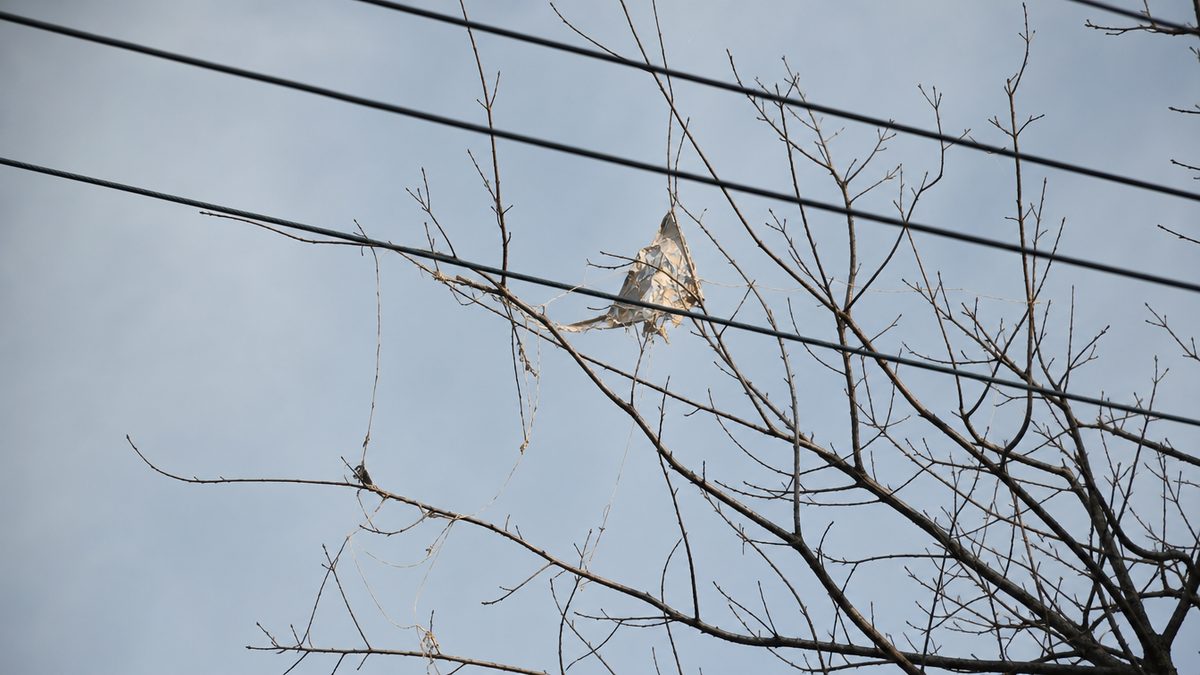
The danger lasts for months after the kites come down, because severed string stays in the trees and on the wires and keeps cutting whatever flies or walks into it.
The best evidence for this is an analysis of the Bruhat Bengaluru Mahanagara Palike's own rescue database. Between November 2010 and June 2014 there were 250 recorded instances of birds trapped in Chinese manja in Bangalore, involving 268 birds of about 10 to 13 species. Black Kites were nearly 70 percent of them, 182 of 268, followed by crows at 39 and rose-ringed parakeets at 11.
The month-by-month breakdown is the part worth knowing. Entanglements happened in every single month of the year, with February at 34, June at 33, March at 31, May at 25, October at 25 and January at 24. The authors attribute that year-round spread to Chinese manja being more durable and less biodegradable than cotton, so it remains in the environment long beyond the kite-flying season. The Wildlife Trust of India reaches the same conclusion from the rescue side, saying severed string stuck in trees is one of the biggest reasons rescue calls continue after the festival is over.
Where the string actually sits
Over 90 percent of entangled birds were rescued from trees, 120 of the 132 cases where the substrate was recorded, with the rest from buildings, electric poles, a telephone pole and a pylon. The average height was 12 metres, and the range ran from 6 to 46 metres. One rescued Black Kite had been dangling for about five days, and another rescue took 32 men about 22 hours.
Your dog cannot reach 12 metres, and the string up there still matters. It comes down in the next storm, it sags onto a compound wall, and children and sweepers pull lengths of it loose into the street.
The pattern is a dense urban one rather than a suburban one. The Bangalore rescues concentrated in the old, densely populated residential centre of the city rather than on its outskirts, because that is where kites are flown from rooftops in the greatest numbers. If you live in an old inner neighbourhood of any Indian city, your street is the high-risk version of this.
The season also starts earlier than most people expect. The Jivdaya Charitable Trust handled 2,373 cases in December 2025 alone, including 1,917 birds, and its first kite-string case of the 2026 season arrived on 15 November. In Bengaluru more kites are flown in the summer, between March and May, than at Sankranti.
Kite seasons are regional. Makar Sankranti in January dominates Gujarat, Rajasthan and Maharashtra, and in Jaipur and Ahmedabad the sky fills with kites from before sunrise to after sunset. In Delhi the peak runs for the weeks before, during and after Independence Day on 15 August. Basant Panchami matters across the north. Bengaluru's own peak is the summer. Pick your weeks and plan around them rather than around a single date.
What to do with your dog or cat during kite season
Change three things during kite season, your walk times, your routes and your terrace access, and you remove most of the risk without changing anything else about your week.
Eight measures cover almost everything, in rough order of how much each one buys you.
- Walk outside the kite hours. Gujarat's own public advisory asks people to avoid flying kites between 8 am and 10 am and between 4 pm and 6 pm, the windows when birds are most active, and a Gujarat government order of 2011, as recorded in the Bangalore study, restricts morning and evening kite flying for the same reason. Those are the hours to keep your dog off open ground.
- Shorten the lead. A short lead keeps a dog inside ground you have already looked at. A retractable lead lets it find a tangle five metres away that you never saw.
- Scan the route before the dog does. Look at pavement edges, hedge bases, park railings, construction plots and the ground under big trees. Manja is almost invisible against grey concrete and dry grass, and its extreme thinness and light colour are exactly what makes it hard to see in daylight.
- Close the terrace and the balcony for the fortnight. Cut kites and loose string land there overnight and nobody sweeps them, which is how cats are caught.
- Clear what you find, wearing gloves. Wind the string onto a stick rather than around your hand, and bin it rather than leaving it in a corner where it blows back out.
- Check the animal after every outing. Run your hands down each leg, around the neck, between the toes and under the tail. You are feeling for a thread, not looking for blood.
- Keep dogs away from dropped spools. A dog that mouths a reel of manja cuts its tongue and may swallow a length of it.
- Say something to whoever is flying. Most people on a residential roof have no idea a ban exists, which the 33.5 percent awareness figure above makes plain.
Indoor cats have the easy version of the route problem and the hard version of the terrace one. Our indoor cat safety guide for India covers balcony netting, which closes this risk and three others at the same time.
If your housing society resists closing the terrace or sweeping it, the approach that tends to work is in our guide to pets in apartments in India. Kite season is a good time to ask, because the committee can see the evidence lying on the floor.
One more thing worth doing in the same week. Both the Gujarat advisory and every rescue organisation ask kite flyers to collect and dispose of loose strings after flying and to avoid flying at night. Passing that on is more useful than an argument about the festival itself.
First aid if your animal is cut or caught in manja
If your animal is cut or caught in manja, stop it moving, cut the loose ends, leave anything embedded alone, press on the bleeding and get to a veterinarian. Never pull the string out.
Seven steps, in order, and the order matters more than the speed.
- Stop the animal moving. Every pull tightens a loop and lengthens a cut.
- Cut, do not pull. Use blunt-tipped scissors on the loose ends only, and hold the thread still on both sides of the cut, because moving what is embedded is what does the deeper damage. Leave any thread that has sunk into the skin exactly where it is, for a vet to remove.
- Protect your own hands first. Wrap them in thick cloth or wear gloves before you touch manja, because the thread that cut the animal cuts you just as easily.
- Press on the bleeding. A clean cloth and firm, steady pressure held in place, not dabbed on and off.
- Pour nothing on it. No turmeric, no oil, no powder, no household antiseptic. Each one makes the wound harder to clean and hides what is underneath.
- Keep the animal warm, quiet and contained while you travel. A ventilated cardboard box for a cat or a small animal, a lead and a calm voice for a dog.
- Say the word manja at the clinic. It tells the vet to look for glass particles in the wound and to check the tendons under a cut that looks shallow, which a generic laceration does not prompt.
Gujarat's own public advisory for an injured bird is to cover it gently with a cloth or towel, place it in a ventilated box, give no food or water, make no attempt to pull out the kite string, and call a trained rescuer or a helpline immediately. The same four rules apply to a dog, a cat or a calf. Pulling drags glass and a cutting edge back through tissue it has already damaged.
Go now rather than in the morning, if there is heavy or uncontrolled bleeding, if string is wrapped tight around the neck or a limb, if a limb is cold or swollen below the thread, if the animal is struggling to breathe, if the gums look pale, or if the wound is anywhere near an eye.
Bonbeno names no drug and no dose for a manja wound. Cleaning, exploring and closing it is a veterinary decision taken on the animal in front of the vet, and a wound with glass in it needs a clinic rather than a cupboard.
The published handling protocol for a bird is worth copying for any frightened animal. Rescuers cover the bird's eyes with a cloth so that it stops struggling and injuring itself further, then carefully cut and remove the manja wrapped around it, and an injured bird is wrapped in cloth, placed in a cardboard box and moved to a rescue and rehabilitation centre.
Do not try to catch a panicking street dog you do not know. A frightened, bleeding animal bites, and a bite turns into a rabies question and often into a complaint against the dog. Our page on rabies in dogs in India explains why that matters more here than anywhere else. Call the people who do this for a living and keep the animal in sight until they arrive.
The dog that eats the string
A dog or cat that has swallowed kite string has a surgical emergency rather than an upset stomach, and it needs a veterinarian the same day.
String belongs to a category veterinarians call a linear foreign body, and it is the most dangerous thing a pet can swallow. If one end lodges, commonly at the base of the tongue in cats, in the stomach or in the intestine, the free end trails on down the gut, the intestine crawls up it and bunches, and the repeated sawing of the thread against the intestinal wall can tear it, leaking intestinal contents into the abdomen and causing peritonitis.
The early signs are unremarkable, which is the danger. Vomiting, refusal to eat, dehydration and lethargy are the common ones, and some cats are restless, sore in the abdomen or hiding more than usual. Diagnosis rests on radiographs showing bunched intestines, often with an ultrasound, and treatment is an exploratory laparotomy, sometimes with incisions at several points along the gut.
If thread is visible at the mouth or under the tail, do not pull it. Pulling drags a sawing edge through tissue it is already cutting and can open the intestine. Cut off whatever hangs free if it is at risk of being stepped on, then go.
Manja makes this worse than ordinary thread, because the swallowed length is either coated in glass or is a sharp synthetic fibre. Tell the vet what the string was, not just that there was string.
How to report manja, and who to call
Report manja to the police and to your local wildlife or animal helpline, and report a seller with specifics, because a general complaint goes nowhere and a named one does not.
The legal footing already exists. The Tribunal's own directions tell states to act against violators under the Environment (Protection) Act 1986, the Prevention of Cruelty to Animals Act 1960, the Wildlife (Protection) Act 1972 or the Indian Penal Code. The Animal Welfare Board of India points out that killing wildlife is an offence under the Wildlife (Protection) Act 1972, whose definition of hunting covers injuring or destroying or taking any part of the body of any such animal, and that causing unnecessary suffering to an animal is illegal under the Prevention of Cruelty to Animals Act 1960.
What makes a complaint actionable is detail, and the Tribunal said so itself when it refused a general enforcement application for want of particulars of the individuals violating the norm and sent the applicant to the trial magistrate. Write down the shop name, the address, the date, the time and what you saw sold, and photograph the spool if you can do it safely.
| Situation | Who to call | Detail |
|---|---|---|
| Your own dog or cat is cut or entangled | Your veterinarian, the same day | Say the word manja so glass and tendon damage are looked for |
| An injured bird or street animal in Gujarat | Karuna Abhiyan helpline, or WhatsApp 83200 02000 | The two government sources give 1926 and 1962; the WhatsApp number is the one both agree on |
| An injured bird in Bengaluru | People for Animals Wildlife Hospital, 99000 25370 | They ask to be called even when the animal is high up, because they carry poles that reach about 120 feet |
| An injured bird in Ahmedabad | Jivdaya Charitable Trust helpline | Cover, box, no food or water, no pulling the string |
| A shop selling nylon or glass-coated manja | Local police station | Note the shop name, address, date, time and what was sold |
| Anyone tying string to an animal | Police, immediately | Cruelty under the Prevention of Cruelty to Animals Act 1960 |
Two government sources give different helpline numbers for Gujarat, so try both. DD News, reporting the forest department, lists a 24-hour helpline on 1926 along with a dedicated WhatsApp number, 83200 02000. The Times of India, reporting the same campaign in the same month, lists 1962 and the same wildlife number 83200 02000. We have published both rather than guessing which is current.
Your district has a Society for the Prevention of Cruelty to Animals on paper whether or not you have heard of it, because the Prevention of Cruelty to Animals Act 1960 empowers every District Collector or Commissioner to set one up and chair it. Ask for it by name when the police ask who should take the animal, because most of the time nobody at the station knows it exists.
Four things are worth having on your phone before the season starts.
- Your own vet's after-hours number, saved under a name you can find in five seconds.
- The nearest wildlife rescue or animal welfare helpline, checked this month rather than copied from a post last year.
- The local police station number, for a seller or for anyone tying string to an animal.
- A current photograph of your own dog or cat, side on and face on, in case it bolts and is found cut somewhere else.
None of this is an argument against kite flying, and nothing here asks anyone to give up a festival that several hundred million people love. The problem is a specific material that is already illegal, and the fix is plain cotton thread, a swept terrace and a phone number saved in advance.
Common questions
Is manja banned in India?
Nylon and synthetic manja is banned across India. The National Green Tribunal ordered a total ban on 11 July 2017 on kite thread made of nylon or any synthetic material, or coated with a synthetic substance, and non-biodegradable, and directed every state to prohibit its manufacture, sale, storage, purchase, use and import. Glass-coated cotton thread is not covered by that national order, although Delhi and Karnataka ban it separately, and the Animal Welfare Board of India has asked the environment ministry to extend the ban to it.
Are kites harmful to birds?
The kite is harmless and the string is not. Gujarat's forest department treated 16,380 birds injured by kite strings between 10 and 20 January 2026, of which 14,690 survived. Pigeons were 13,636 of that total, followed by 905 black kites and 281 crows, across 41 species. In Bangalore, Black Kites were nearly 70 percent of 268 entangled birds recorded between 2010 and 2014, because larger birds are more likely to meet a hanging thread in flight.
How to protect from Chinese manja?
Protect animals from Chinese manja by keeping them away from the places it collects. Walk dogs outside the main kite hours, use a short lead, scan pavements and park edges before the dog gets there, close terraces and balconies for the fortnight, clear any string you find while wearing gloves, and run your hands over the animal after every outing. Fly plain cotton thread yourself and collect your own string afterwards rather than leaving it in the trees.
How to treat an injured bird at home?
Do not treat an injured bird at home. Gujarat's published advisory is to cover the bird gently with a cloth or towel, place it in a ventilated box, give it no food or water, make no attempt to pull out the kite string, and call a trained rescuer or a helpline immediately. Covering the eyes stops it struggling and injuring itself further. Manja wounds often involve glass in the tissue, fractures or a partly severed wing, none of which can be managed without a veterinarian.
Can a bird's wound heal on its own?
Some do and the serious ones do not, and you cannot tell which from the outside. Of 250 manja rescues in Bangalore, 216 birds were fit to release immediately, while 10 needed prolonged care, 5 died and 1 was euthanised. A Bengaluru chief veterinarian reports that nearly one in ten birds injured by manja do not survive despite timely rescue, and that others are permanently disabled when the thread partially amputates a wing. Have it assessed rather than waiting.
What will you do if you see an injured animal on the road?
Keep it still, keep yourself safe, and call a rescue line rather than handling it. Do not pull any string that is embedded in the skin. Press a clean cloth on heavy bleeding if the animal allows it, note the exact location, and stay in sight until help arrives. Do not try to catch a panicking street dog you do not know, because a frightened injured animal bites and the bite becomes a rabies question and often a complaint against the dog.
What should I do if my dog is cut by manja?
Stop the dog moving, cut only the loose ends of the string with blunt-tipped scissors, leave anything embedded in the skin alone, press a clean cloth firmly on the bleeding, and take the dog to a vet the same day. Put nothing on the wound, not turmeric, oil, powder or household antiseptic. Say the word manja at the clinic, because it tells the vet to look for glass particles and to check the tendons under a cut that looks shallow.
Can manja kill a dog or a cat?
No Indian study has counted deaths of dogs or cats from manja, and the risk is real enough to treat every wound as serious. Human forensic records show both deaths in a 26-case series came within minutes from blood vessel damage in the neck. A swallowed length is a separate emergency, because string that lodges in the gut saws through the intestinal wall and causes peritonitis, which is life-threatening and needs surgery.